

Why the smallest daily decisions are quietly costing you more than you think.
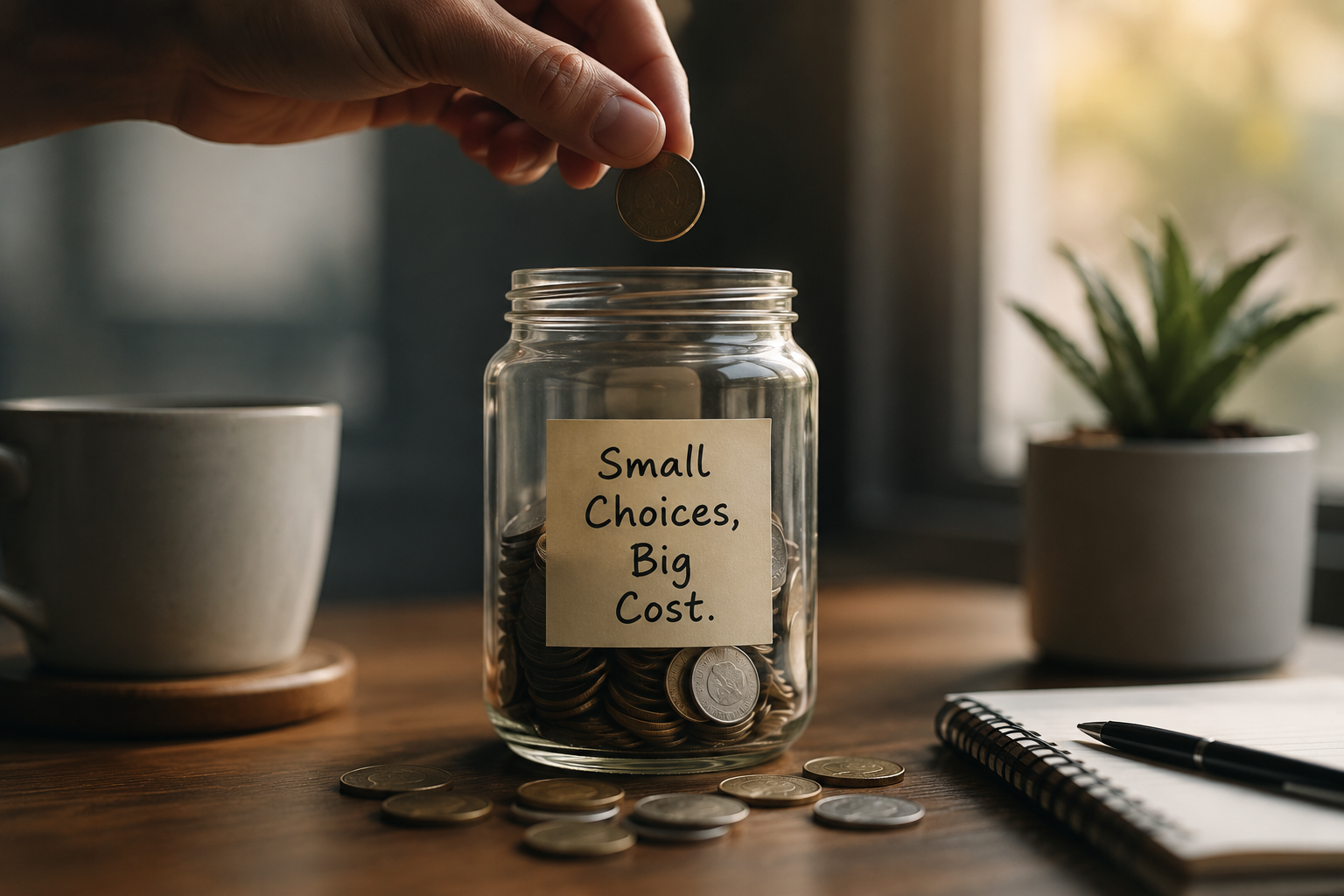
You probably won’t find it in your monthly bank statement. It isn’t a home loan, a car EMI or an extravagant shopping spree. In fact, it’s so ordinary that most people barely notice it. Yet over months and years, it can quietly drain thousands of rupees from your pocket.
The most expensive habit isn’t buying luxury products. It’s spending without thinking.
Modern life has made that easier than ever. A cup of coffee ordered through an app, a subscription renewed automatically, groceries delivered in minutes or an impulse purchase made with a single tap each transaction feels insignificant. Individually, they rarely raise concern.
Together, they create a pattern of spending that most people never stop to examine.
This is what economists often call “frictionless spending.” Digital payments, one-click checkouts and subscription-based services have removed the small moments of hesitation that once came with handing over cash. When money becomes invisible, so does the act of spending it.
The change has been gradual. A decade ago, buying something usually required visiting a store, carrying cash or entering card details. Today, the process takes seconds. Convenience has become one of the most valuable products in the digital economy—and consumers are paying for it, often without realising how much.
Food delivery offers a familiar example. A meal that appears affordable on the app rarely ends at the listed price. Delivery charges, platform fees, packaging costs and taxes quietly increase the final bill. Most customers accept the extra amount because the convenience outweighs the discomfort of paying more.
The same pattern extends far beyond food. Streaming services, cloud storage, premium memberships, ride-hailing apps and online shopping have introduced a new kind of monthly expense small recurring payments that are easy to ignore but difficult to escape. Individually, they may seem harmless. Collectively, they reshape household budgets.
Behavioural economists have long argued that people respond differently to digital payments than to physical cash. The less visible the transaction, the less emotionally significant it feels. That psychological shift has become one of the defining features of modern consumer behaviour, encouraging frequent, low-value purchases that rarely feel like spending.
None of this suggests that convenience is a bad thing. Digital services have saved time, expanded choice and transformed the way people live and work. The issue is not convenience itself, but the tendency to overlook its cumulative cost.
For many households, the biggest financial challenge is no longer a single expensive purchase. It is a series of small decisions repeated every day without a second thought.
The next time you reach for your phone to place an order, renew a subscription or pay with a single tap, pause for a moment. The price on the screen may seem small. But the habit behind it could be one of the most expensive investments you’re making without ever intending to.