

There was a time when the West Indies did not have to worry about whether they would be at a World Cup. They were among the teams everyone else had to worry about.
That certainty is gone.
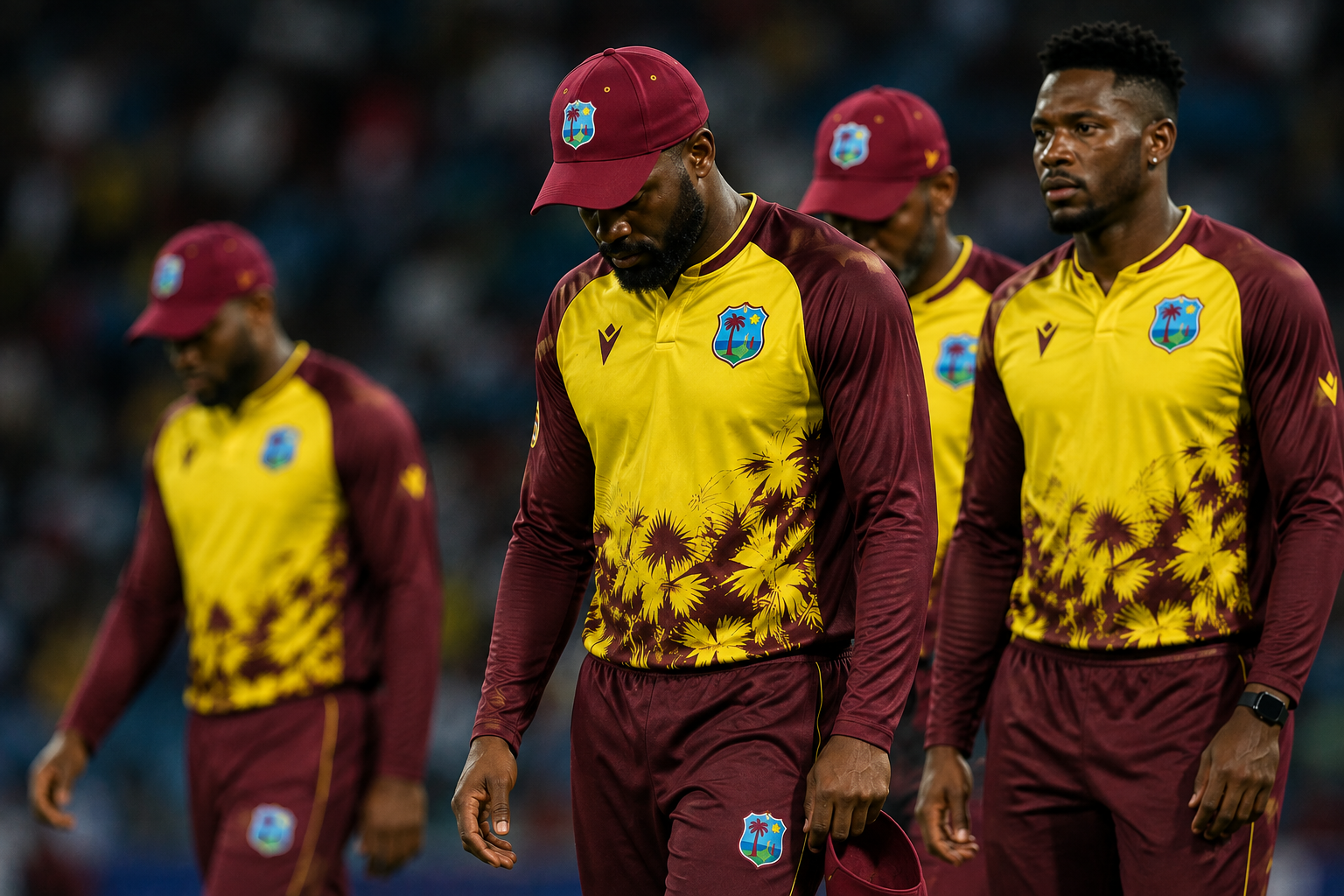
The West Indies have failed to secure direct qualification for the 2027 ODI World Cup and will once again have to fight their way through the qualifiers. It is the third consecutive World Cup cycle in which the two-time champions have missed out on automatic qualification.
The result was effectively sealed after Afghanistan beat Ireland by 92 runs in the second ODI of their series on Friday. Rashid Khan’s six-wicket haul helped Afghanistan move further ahead in the qualification race, leaving the West Indies with no realistic route into the top eight before the September 30 ranking cut-off.
The frustrating part for the West Indies is that they still have a series against India to play.
It will matter for their ranking and preparation, but it cannot change their qualification fate. The team can no longer finish high enough to claim one of the direct places for the 2027 tournament.
For West Indies cricket, this is becoming an uncomfortable pattern.
The team missed direct qualification for the 2019 World Cup and had to go through the Qualifier. Four years later, the situation became worse: they failed to qualify for the 2023 World Cup at all after losing in the Super Six stage of the Qualifiers.
Now they are facing the same road again.
The contrast with their past is difficult to ignore. West Indies won the first two editions of the ODI World Cup, in 1975 and 1979. Their cricket once carried an aura that went beyond rankings and qualification tables. Players such as Viv Richards, Clive Lloyd, Gordon Greenidge and Malcolm Marshall helped turn the West Indies into one of the most feared sides in international cricket.
That history, however, cannot earn a team a place in a modern World Cup.
The current qualification system is based on the ODI rankings, with South Africa and Zimbabwe qualifying automatically as co-hosts and the remaining direct places going to the highest-ranked eligible teams at the cut-off date.
The West Indies are now outside that group and will have to take the longer route.
There is still a World Cup waiting at the end of it. But the qualifying tournament leaves very little room for mistakes, and the West Indies know from recent experience how quickly that opportunity can disappear.
That is perhaps the most important part of this setback. This is no longer a one-off failure for West Indies cricket. It is becoming a recurring problem.
The talent is still there. The name still carries enormous weight. What has proved harder to find is the consistency needed to remain among the teams that qualify automatically.
For a side with such a remarkable World Cup history, having to qualify is no longer just a ranking problem.
It is a measure of how far the West Indies have fallen and how much work remains before they can feel at home on cricket’s biggest stage again.