

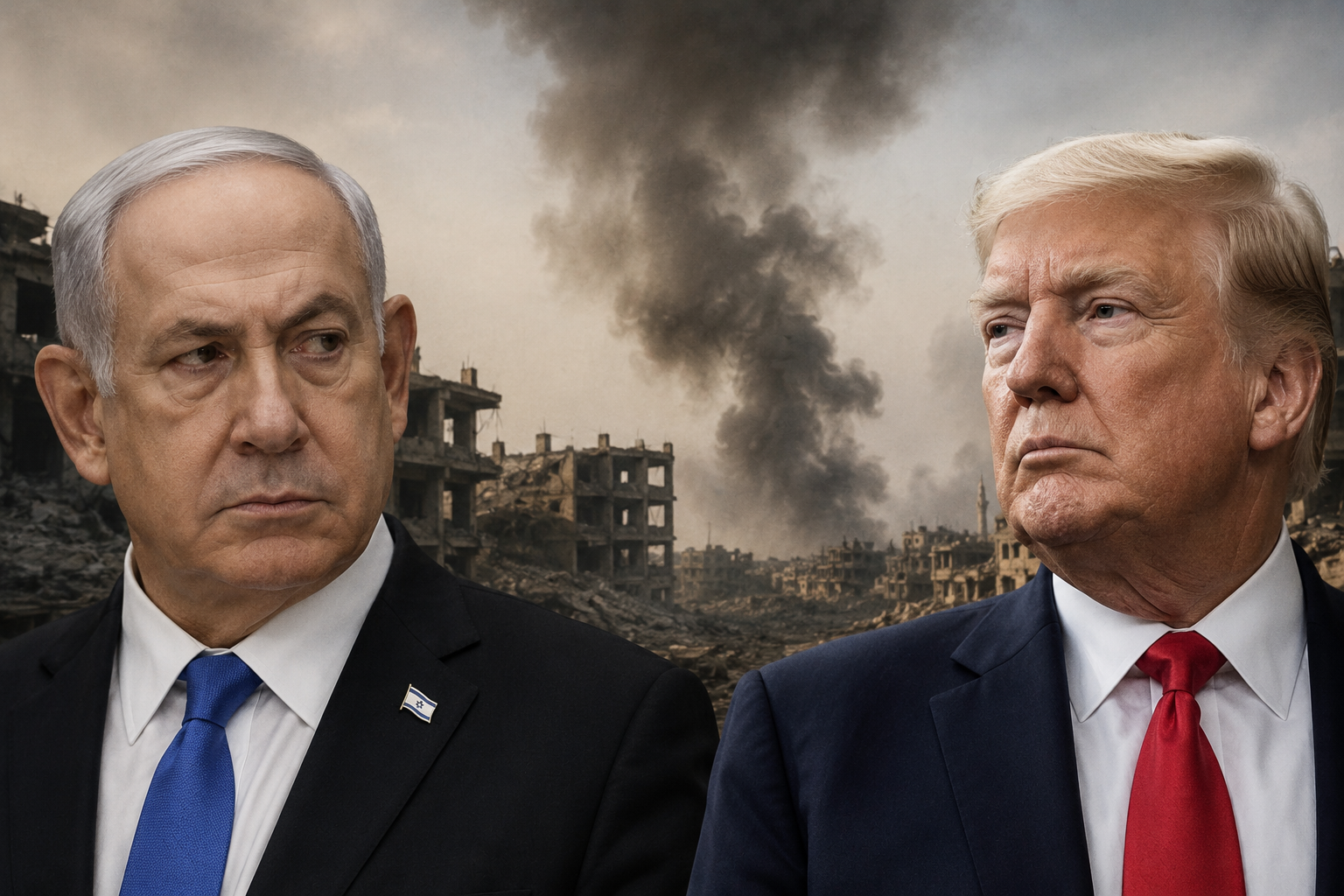
Israeli Prime Minister Benjamin Netanyahu has rejected US President Donald Trump’s latest 15-point plan for Gaza, creating a fresh obstacle for efforts to end the war and exposing differences between the two leaders over how a ceasefire should proceed.
Netanyahu told his cabinet that Israel would not accept the proposal in its current form and that Israeli forces would not withdraw from Gaza until Hamas had been fully disarmed. Israeli officials have conveyed reservations to Washington, although discussions between the two sides are continuing.
Trump’s plan envisages Hamas handing over its weapons, followed by a phased Israeli military withdrawal. An International Stabilization Force and a new Palestinian police force would then help secure Gaza, while a US-backed Palestinian technocratic administration would oversee the territory.
Hamas has said it remains committed to the roadmap, but its interpretation differs from Israel’s. A senior Hamas official told Reuters that the group expected the United States and mediators to press Israel to honour its commitments, including withdrawal and an end to attacks.
The disagreement centres largely on timing. Israel says withdrawal must follow Hamas’ disarmament, while Hamas has linked implementation to Israel first meeting its own obligations.
The dispute comes as Israel has scaled back military activity in Gaza since Monday, according to Reuters. Israeli officials said the military would act only against what it considers immediate threats and would no longer conduct targeted assassinations as frequently as before.
For Palestinians in Gaza, the diplomatic dispute comes against the backdrop of a devastating conflict. Reuters, citing Gaza health officials, reported that more than 1,250 people had been killed in Israeli attacks since the US-mediated ceasefire reached in October 2025.
The latest disagreement leaves the proposed peace framework uncertain. Washington and mediators continue to work on the details, but Israel and Hamas remain divided over the order in which its central commitments should be carried out.