

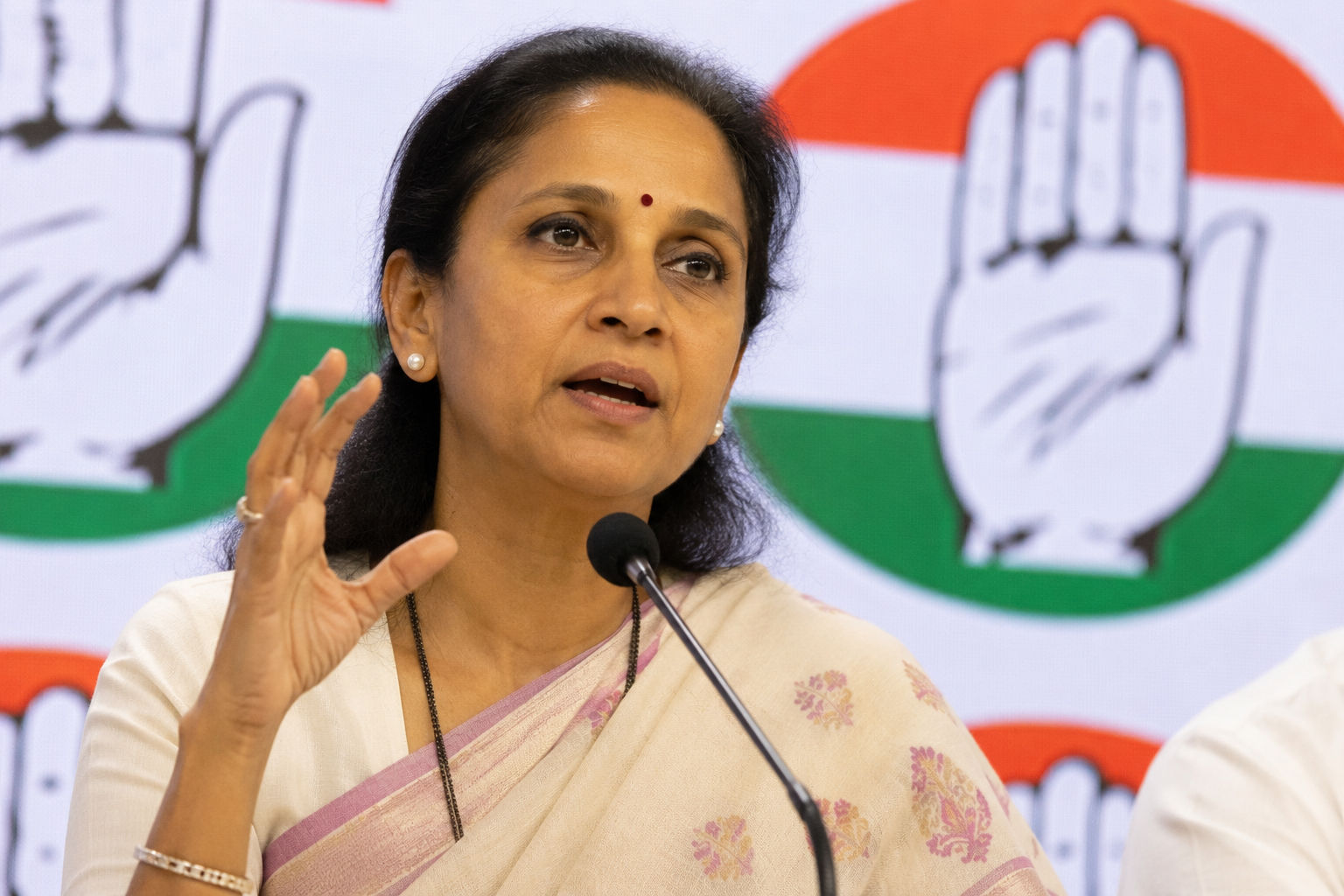
The Congress has asked NCP (Sharadchandra Pawar) MP Supriya Sule to use her scheduled meeting with Prime Minister Narendra Modi to press the government on the Opposition’s position over women’s reservation and delimitation.
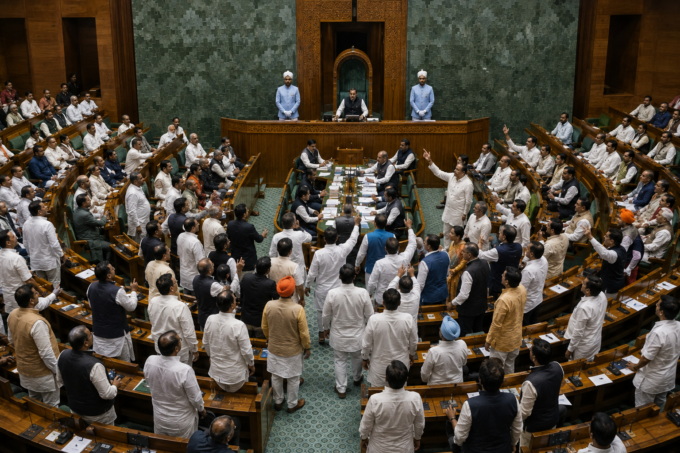
Sule is expected to meet Modi on Monday. The meeting comes at a politically sensitive point, with the Centre again trying to build support for legislation that would pave the way for 33 per cent reservation for women in the Lok Sabha and state assemblies while also expanding the strength of the Lok Sabha through delimitation.
The Congress wants Sule to make the INDIA bloc’s position clear during the meeting. The party’s intervention is significant because NCP (SP) has previously indicated that it could consider supporting a delimitation proposal if the Centre guarantees a 50 per cent increase in Lok Sabha seats for every state.
That condition has become one of the key points in the wider political argument.
The government is looking at increasing the Lok Sabha’s strength from the present 543 seats to as many as 816 as part of its plan to operationalise women’s reservation before the 2029 general election. The proposed exercise would be based on the 2011 Census.
The earlier constitutional amendment bill failed in April after falling short of the required two-thirds majority in the Lok Sabha. It received 298 votes in favour and 230 against. The government has since begun reaching out to Opposition parties and allies in an effort to revive the legislation.
For Sule and the NCP (SP), the issue is not simply whether women’s reservation should be implemented. The party has supported the principle of the quota, but it has raised concerns over how delimitation could alter the balance of representation between states.
Sule had earlier said her party could consider supporting the delimitation Bill if every state received a 50 per cent increase in Lok Sabha seats and if the legislation clearly explained the basis on which constituencies would be redrawn.
That distinction matters particularly to southern states, which fear that a population-based redistribution of seats could reduce their relative influence in Parliament after decades of pursuing population-control policies.
The Centre, meanwhile, appears to be trying to find a formula that can address those concerns without abandoning the broader objective of updating parliamentary representation. Government sources have indicated that a provision guaranteeing a 50 per cent increase in seats for every state is being considered.
The political arithmetic remains difficult. The previous Bill could not secure the required majority, and the government still needs support beyond its own numbers to pass a constitutional amendment.
That makes meetings such as the one between Modi and Sule more than routine political consultations.
There is no indication that Sule’s meeting will lead to a change in the NCP (SP)’s political alignment. But it will offer an important test of whether the government can persuade Opposition parties to separate their support for women’s reservation from their objections to the proposed delimitation formula.
For the Congress, the immediate task is to keep the Opposition’s position from fragmenting.
For the Centre, the challenge is to build enough consensus around a proposal that touches two politically sensitive questions at once: who gets represented in Parliament, and how much representation women will receive.
What Sule takes to the Prime Minister’s table on Monday could therefore matter well beyond one meeting.