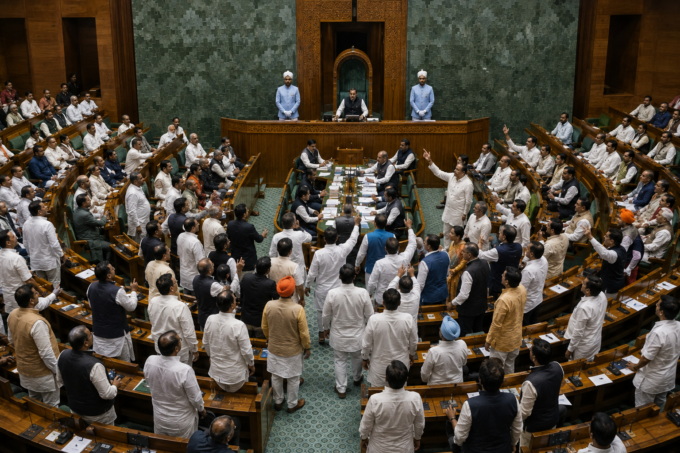


Tamil Nadu’s political fight over delimitation is gathering momentum again, with a meeting of MPs in Chennai backing a resolution to retain the Lok Sabha’s existing strength of 543 seats.
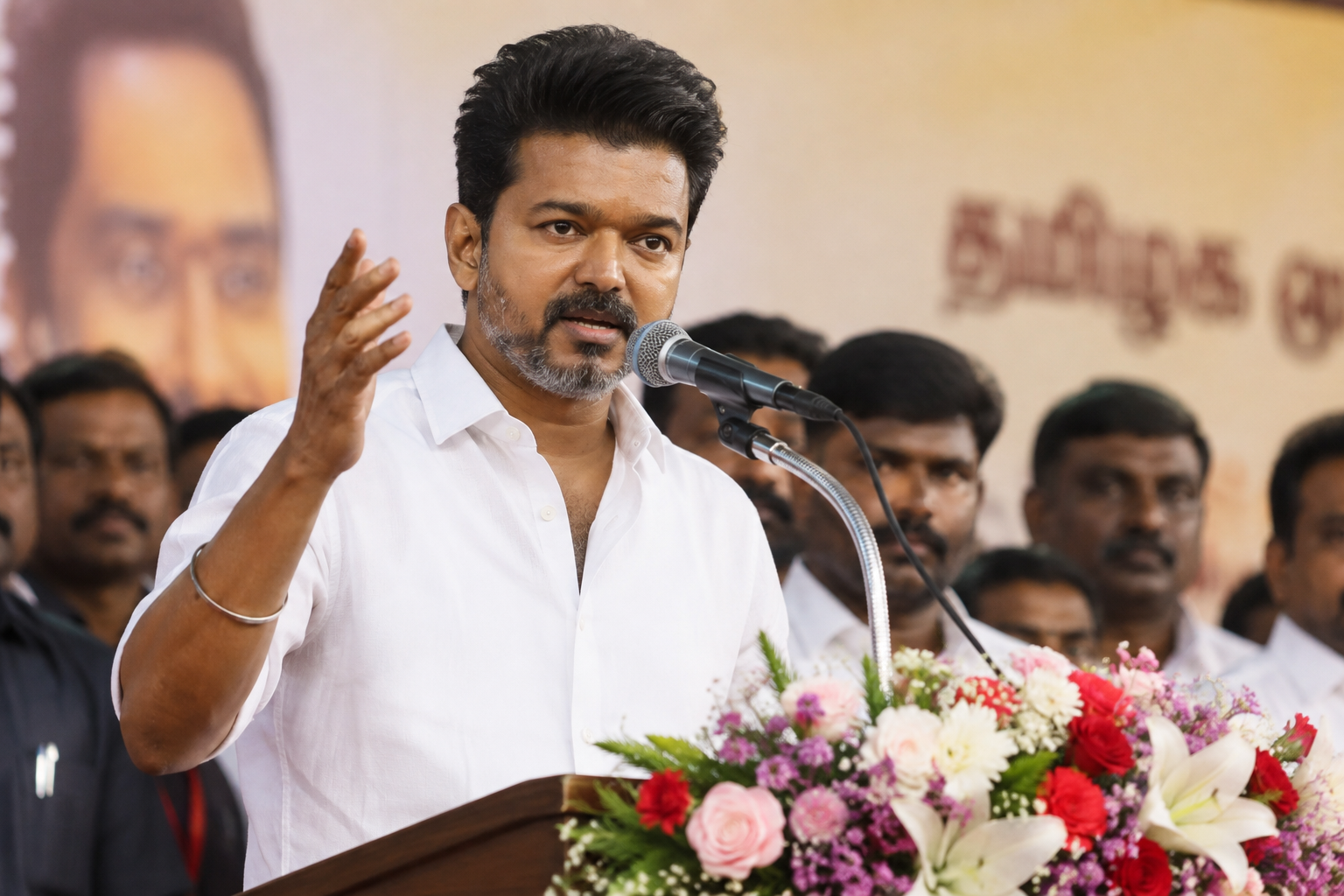
The meeting, convened by Tamilaga Vettri Kazhagam leader Vijay on Saturday, brought together MPs from the Congress, VCK, MDMK, IUML, CPI and CPI(M). The DMK and AIADMK did not attend. The resolution called for the present number of Lok Sabha seats to be protected as the country moves towards its next delimitation exercise.
On paper, it is a debate about parliamentary seats. In Tamil Nadu, however, the argument goes much deeper.
The state has spent decades pursuing policies aimed at controlling population growth. Its political parties now fear that a delimitation based primarily on population could leave Tamil Nadu with a smaller share of India’s parliamentary representation, even if the absolute number of seats increases.
Tamil Nadu currently sends 39 MPs to the Lok Sabha. The concern is not simply whether that figure will rise. It is what those 39 or any larger number will represent as a proportion of the entire House.
That distinction is at the heart of the dispute.
India froze the readjustment of Lok Sabha and Assembly constituencies decades ago, partly to ensure that states would not be politically disadvantaged for adopting population-control measures. The freeze was subsequently extended until 2026. With that period now coming to an end, the question of how representation should be recalculated has returned to national politics.
The Centre has indicated that expanding the size of the Lok Sabha could help address some of the concerns. Instead of taking seats away from one state to give them to another, a larger House could allow several states to gain additional representation. Under a proposal discussed by the government, the Lok Sabha could expand substantially beyond its present 543 seats.
But that has not removed the concern in Tamil Nadu.
For the state’s political parties, representation is ultimately about influence. A state may receive more MPs in absolute terms and still see its share of the House decline if other states gain seats at a faster rate.
That is why the delimitation debate has become a question of federal balance, not just electoral arithmetic.
There is also a political calculation behind Saturday’s meeting. The DMK has been one of the strongest voices against a population-based delimitation, yet it was absent from the TVK-led meeting. Vijay’s entry into the debate gives the issue another political dimension at a time when Tamil Nadu is heading towards its next Assembly election.
For the Centre, the challenge is equally delicate. India cannot indefinitely keep parliamentary representation disconnected from demographic changes. But any new formula will have to convince states such as Tamil Nadu that population control will not become a political penalty.
That is the real difficulty facing the delimitation exercise.
The question is no longer simply how many seats Parliament should have. It is how India can update its political map without disturbing the balance between states that lies at the heart of its federal system.
Tamil Nadu’s latest move does not resolve that question. It does, however, make clear that the debate over the next Lok Sabha map will be about much more than numbers.