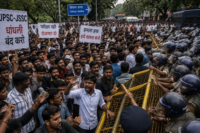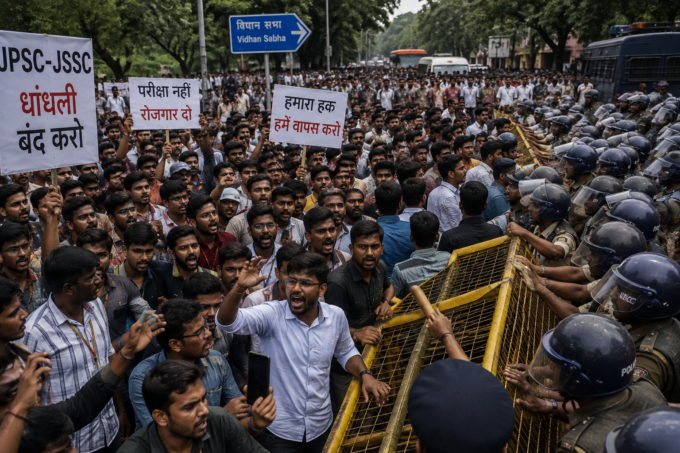


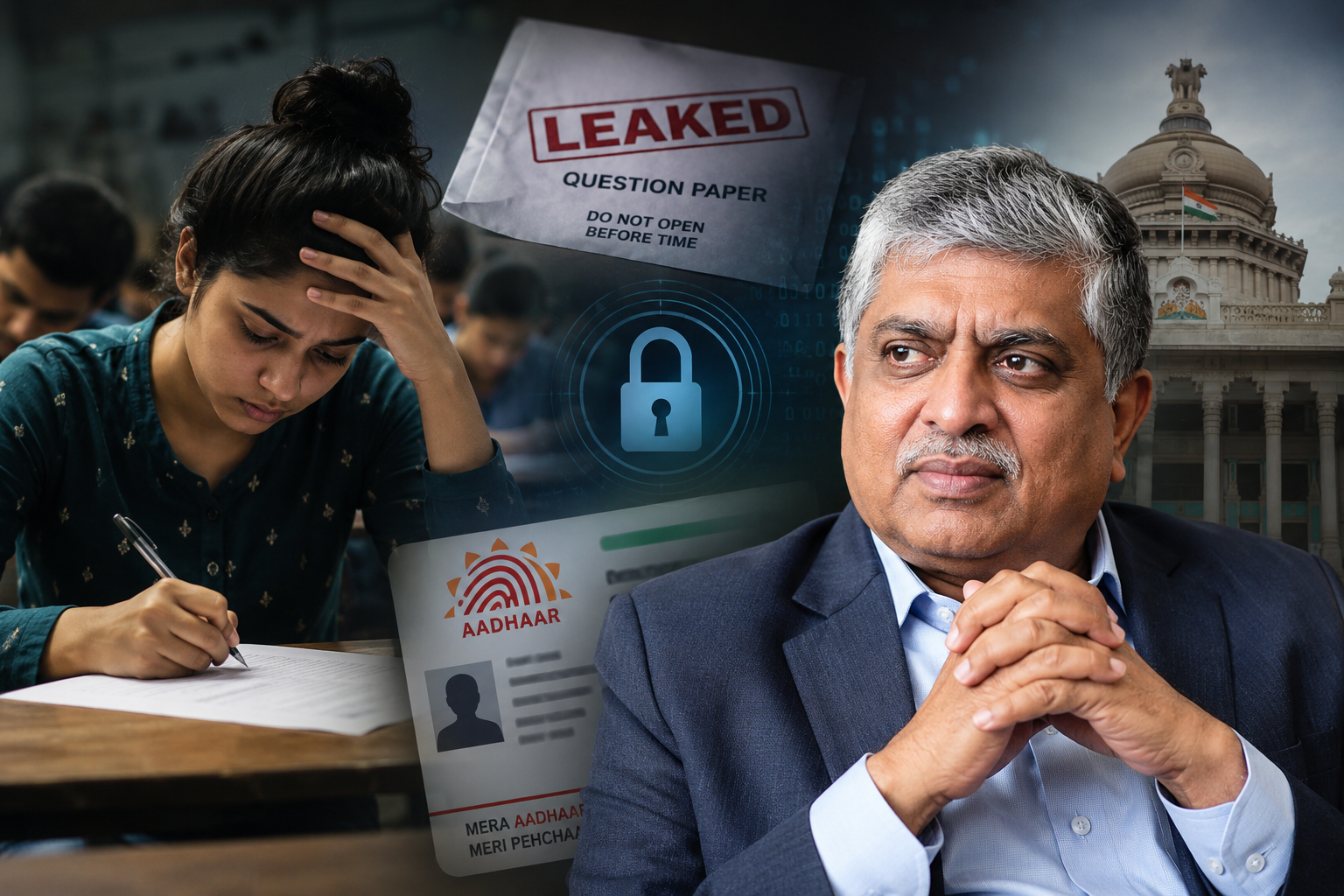
For lakhs of students, the biggest fear today isn’t a difficult exam it’s whether the question paper has already been leaked.
Years of hard work can be wiped out by a single breach, leaving students to relive months of preparation all over again. As paper leak scandals repeatedly disrupted competitive examinations and shook public confidence, the Centre has turned to one of India’s most trusted technology minds Infosys co-founder and Aadhaar architect Mr. Nandan Nilekani.
Prime Minister Narendra Modi announced the decision through a video message on Instagram, assuring students that the government would build a secure, transparent and technology-driven examination system to protect their future.
The choice of Nilekani is rooted in his track record of building systems that work at an unprecedented scale. After co-founding Infosys in 1981, he went on to lead the Unique Identification Authority of India (UIDAI) in 2009, where he spearheaded Aadhaar the world’s largest biometric identity programme.
Today, Aadhaar securely serves more than 1.4 billion residents and powers everything from welfare delivery and banking to digital identity verification.
Nilekani also played a pivotal role in shaping India’s Digital Public Infrastructure, helping build the ecosystem behind e-KYC, DigiLocker and UPI platforms designed to securely verify identities, protect sensitive data and process billions of digital transactions every month.
That experience is exactly what the government hopes to bring into India’s examination system. Conducting nationwide exams involves far more than printing question papers. It requires secure candidate verification, encrypted handling of confidential papers, protected digital records and tamper-proof results.
Whether technology alone can eliminate paper leaks remains to be seen. But by choosing the architect behind Aadhaar instead of another education expert, the government has made its strategy clear: rebuilding students’ trust will begin with rebuilding the system itself.