

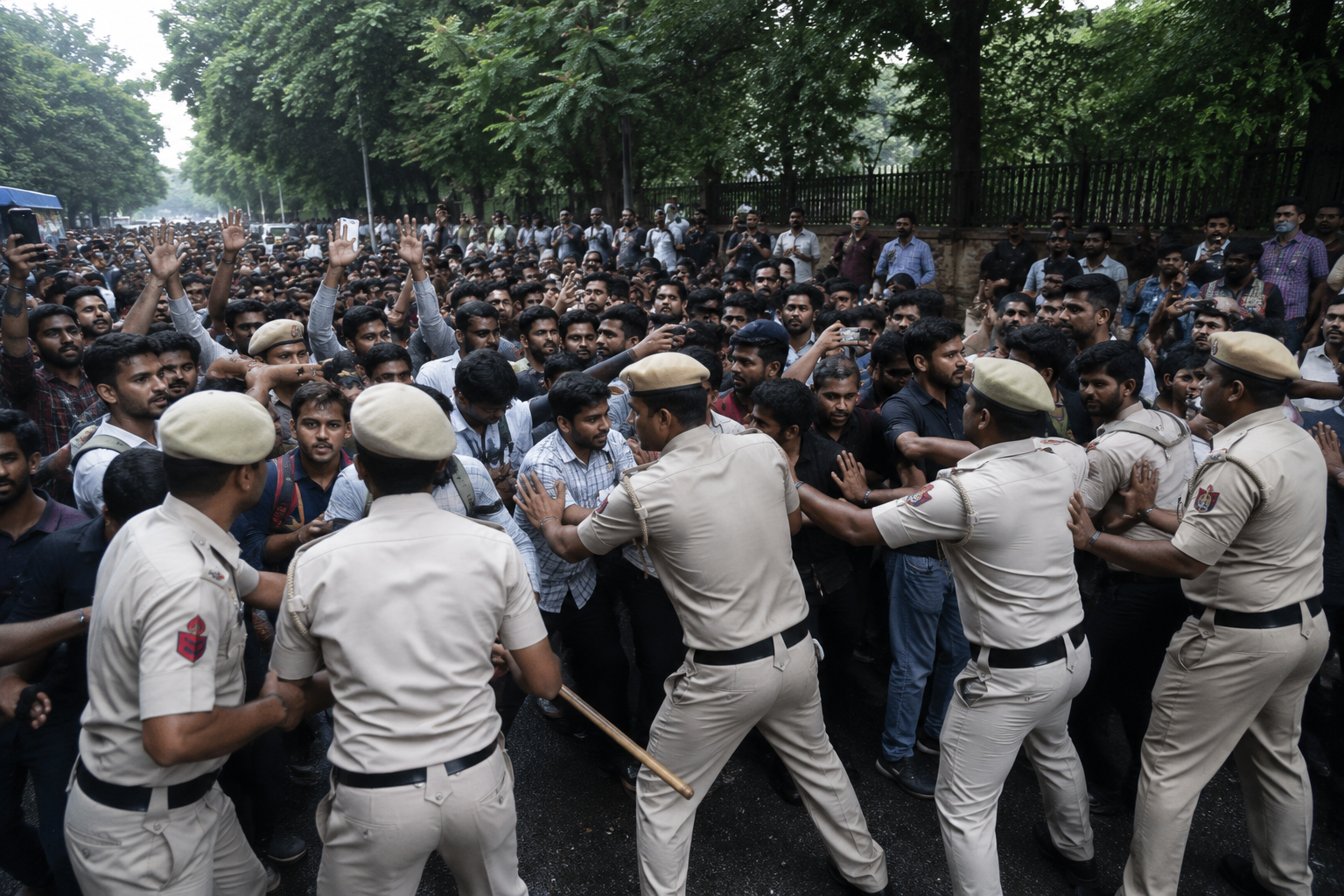
Videos from recent protests in Delhi have sparked a national debate after some police personnel were seen in plain clothes or without visible name badges while carrying out crowd-control duties.
The footage has raised questions about transparency, accountability and whether such practices are allowed under Indian law.
Indian law does not prohibit police from deploying officers in plain clothes for intelligence gathering or specific operational needs. However, when officers exercise public powers such as dispersing crowds, making arrests or using force they are generally expected to be identifiable.
The Supreme Court’s landmark D.K. Basu judgment stressed that police personnel should display clear identification to ensure accountability during official actions.
The current controversy stems from videos showing officers using batons while their identities were not clearly visible. Critics argue that this makes it difficult for citizens to identify officers or seek accountability if excessive force is alleged. Police officials, on the other hand, say plainclothes deployments can sometimes be necessary for operational and security reasons.
Why it matters: Public trust depends on both effective policing and accountability. The debate is not only about uniforms—it is about whether citizens can identify officials exercising state power when protests turn tense.