

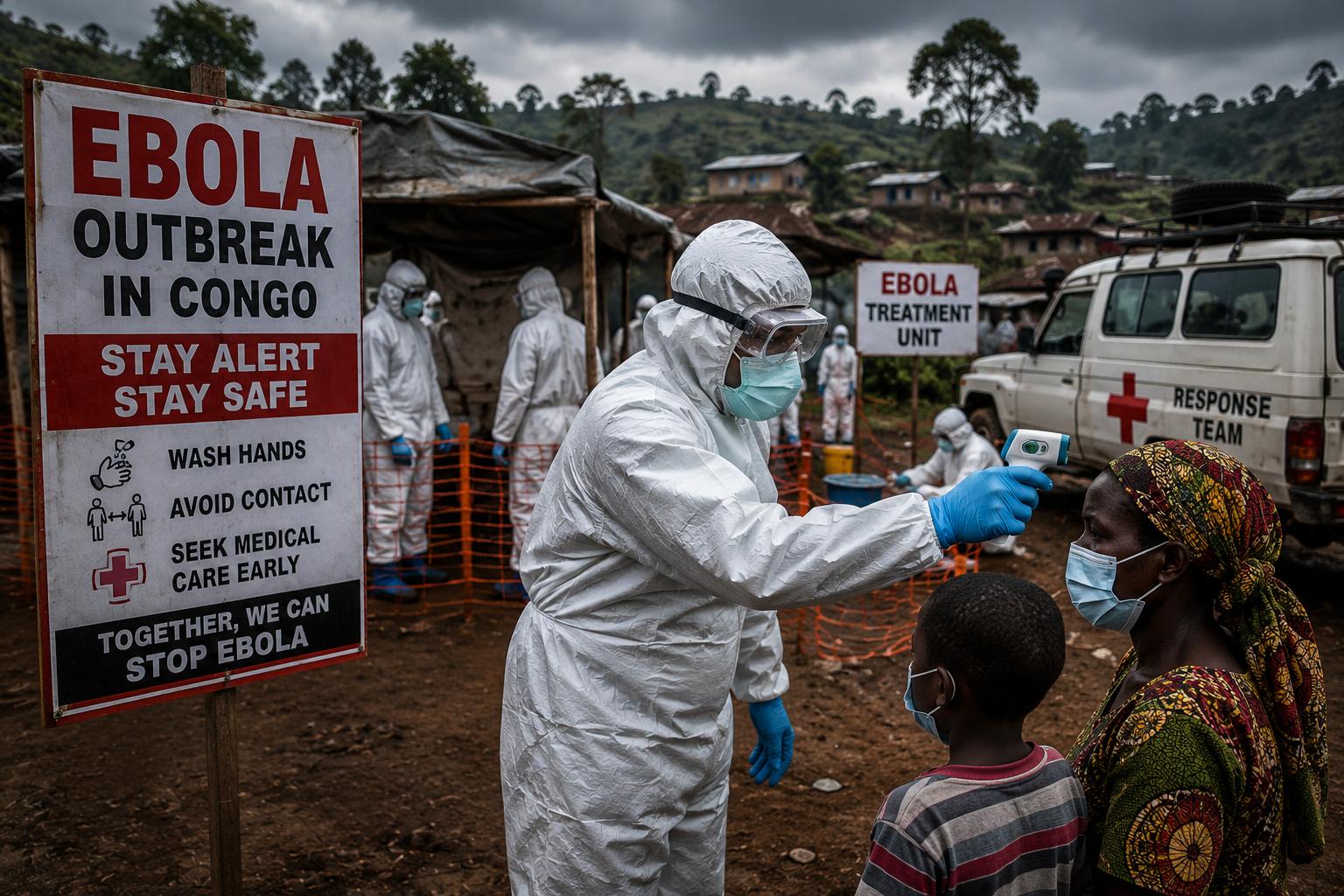
The Democratic Republic of Congo is facing its fastest-growing Ebola outbreak on record, with the death toll now surpassing 1,000 and confirmed infections continuing to rise in the eastern provinces of Ituri and North Kivu.
Health officials say more than 2,500 confirmed cases have been recorded since the outbreak was declared in May, but they fear the true number could be much higher because many infections are going undetected.
Unlike previous outbreaks, this one is caused by the Bundibugyo strain of the Ebola virus, for which there is currently no approved vaccine or specific treatment.
Containing the virus has become increasingly difficult. Armed conflict, attacks on healthcare workers, community mistrust and limited access to remote villages have slowed contact tracing and delayed treatment. Health experts say many patients die at home instead of in treatment centres, making it harder to identify new chains of transmission.
The World Health Organization and Africa CDC have warned that unless surveillance improves and communities cooperate with health teams, the outbreak could continue to spread despite international assistance.
For the rest of the world, the outbreak is a reminder that infectious diseases remain a global challenge. While Ebola does not spread as easily as viruses like COVID-19, it has a high fatality rate and requires rapid detection to stop transmission. International health agencies are monitoring neighbouring countries closely to prevent cross-border spread.
The crisis also highlights a wider issue: outbreaks are far harder to control where conflict, weak healthcare systems and public distrust intersect. What happens in eastern Congo will shape not only regional public health but also the world’s preparedness for future epidemics.