

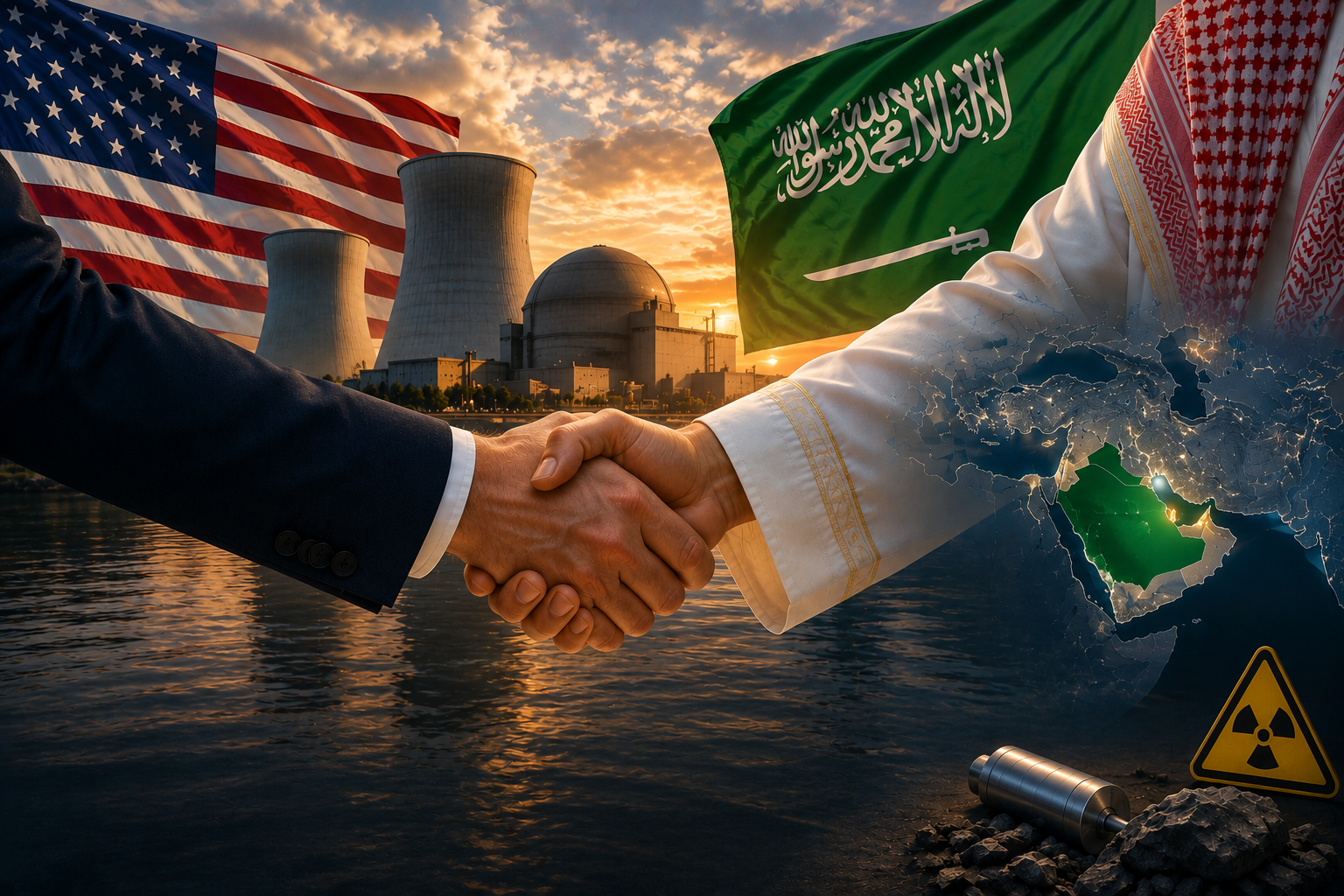
The United States and Saudi Arabia have signed a landmark civil nuclear cooperation agreement, ending years of negotiations over the kingdom’s nuclear ambitions. Known as a “123 Agreement”, the deal provides the legal framework for American companies to help Saudi Arabia build nuclear power plants and develop its civilian nuclear energy programme.
Unlike previous proposals, however, the agreement also leaves open the possibility that Saudi Arabia could enrich uranium on its own soil a provision that has sparked debate among lawmakers and nuclear experts. The agreement must now undergo a 90-day review in the US Congress before it can fully take effect.
Saudi Arabia says it wants nuclear energy to diversify its economy, reduce domestic oil consumption and meet rising electricity demand under its Vision 2030 programme. But uranium enrichment is a sensitive issue because the same technology used to produce fuel for nuclear reactors can, if enriched further, be used to make nuclear weapons.
Previous US nuclear agreements with countries such as the UAE prohibited domestic uranium enrichment and included stricter international inspection requirements. The new deal takes a different approach, arguing that bilateral safeguards are sufficient, while critics warn it could weaken long-standing non-proliferation norms.
The agreement also reflects a wider geopolitical contest. Washington wants American companies, particularly Westinghouse, to play a leading role in Saudi Arabia’s nuclear sector instead of rivals such as China and Russia. At the same time, the deal comes amid heightened tensions with Iran, whose nuclear programme remains one of the region’s biggest security concerns.
Analysts say if more countries in the Middle East seek similar capabilities, it could reshape the region’s strategic balance for decades. For the rest of the world, the agreement is not just about energy it is about how nations balance clean power, commercial interests and nuclear security in an increasingly competitive geopolitical landscape.