

A newly identified rocky planet beyond the Solar System has emerged as one of the most promising places yet in the search for life after astronomers found evidence that it may possess conditions capable of supporting liquid water, according to a study published this week.
The planet, designated LHS 1140 b, lies about 48 light-years from Earth in the constellation Cetus. While scientists are not claiming the discovery of life, new observations suggest the world has retained an atmosphere despite orbiting an active red dwarf star a finding that challenges long-held assumptions about the habitability of planets around such stars.
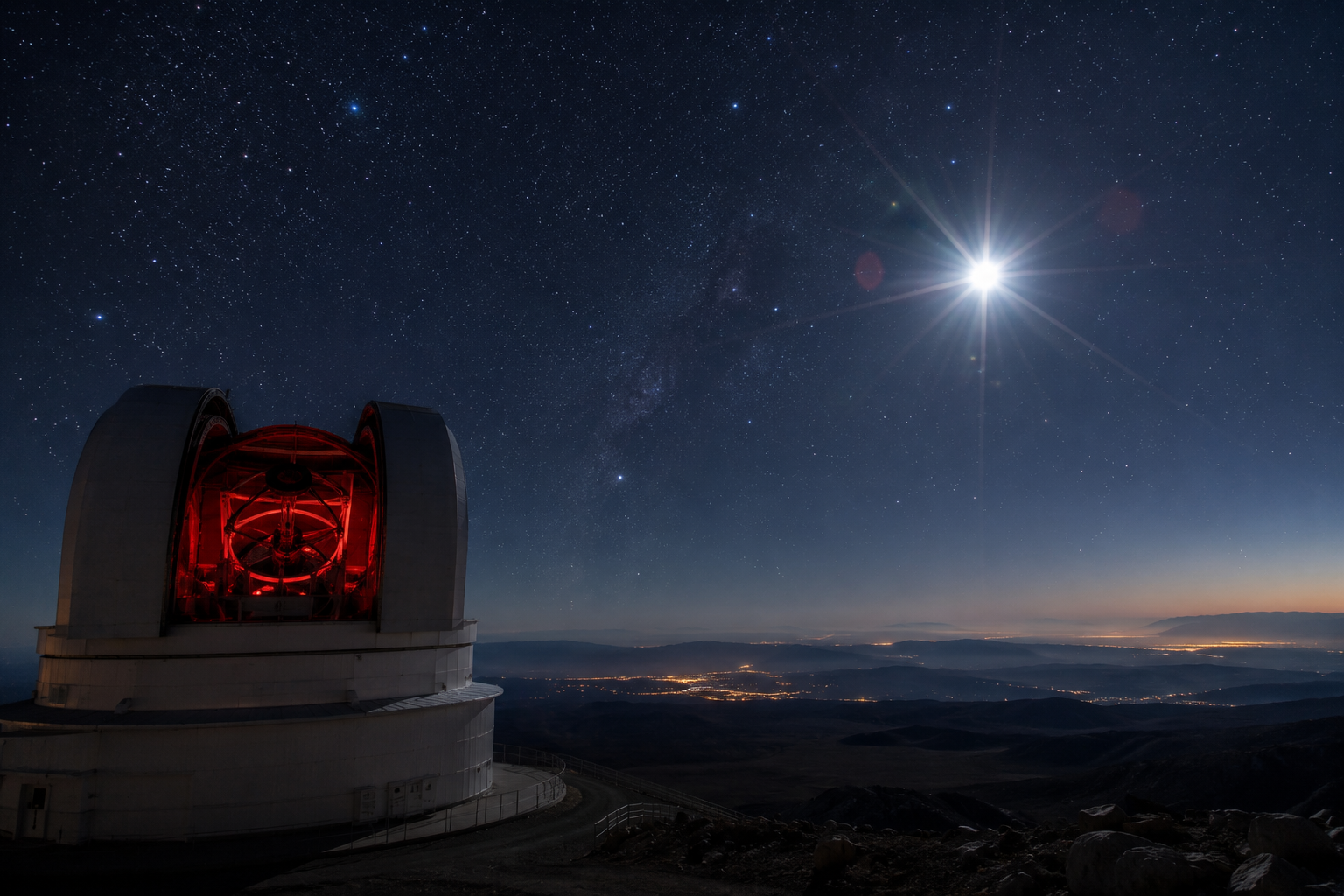
The research, published in the journal Science, is based on observations made with the WINERED spectrograph on the Magellan Clay Telescope in Chile. Scientists detected helium escaping from the planet’s upper atmosphere, providing the clearest evidence so far that the rocky world has an atmosphere rather than a barren surface.
For astronomers, that changes the conversation.
Until now, many researchers believed intense radiation from red dwarf stars would strip nearby rocky planets of their atmospheres over time. LHS 1140 b appears to have survived that process, raising the possibility that similar planets across the galaxy could also remain stable enough to host liquid water.
LHS 1140 b is around 1.7 times the size of Earth and 5.6 times more massive. It completes one orbit around its star every 24.7 days, but because the star is much cooler than the Sun, the planet receives significantly less energy than Earth. That places it inside the star’s habitable zone, where temperatures may allow water to exist in liquid form under the right atmospheric conditions.
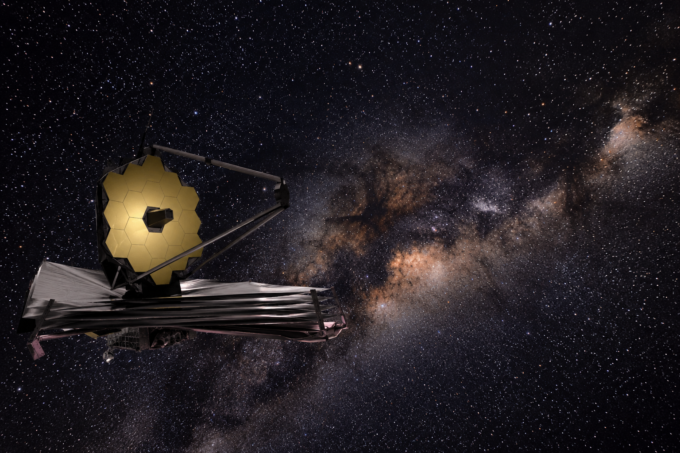
The latest findings build on years of observations of the planet since its discovery in 2017. Data from the James Webb Space Telescope had already hinted that LHS 1140 b could contain substantial amounts of water or even an ocean beneath its atmosphere.
The new detection strengthens its status as one of the leading targets for future studies of planetary habitability.
Scientists caution that the results should not be interpreted as evidence of alien life. No biological signatures have been detected, and researchers have yet to determine the full chemical composition of the planet’s atmosphere.
Future observations will focus on identifying gases such as water vapour, carbon dioxide and methane, which could offer a clearer picture of the planet’s environment.
More than 5,900 exoplanets have been confirmed since the first planet outside the Solar System was discovered in the 1990s.
Yet only a small fraction are rocky worlds located in habitable zones, and fewer still have shown convincing evidence of an atmosphere. That makes LHS 1140 b one of the most closely watched planets in astronomy as scientists continue the search for environments where life might exist beyond Earth.