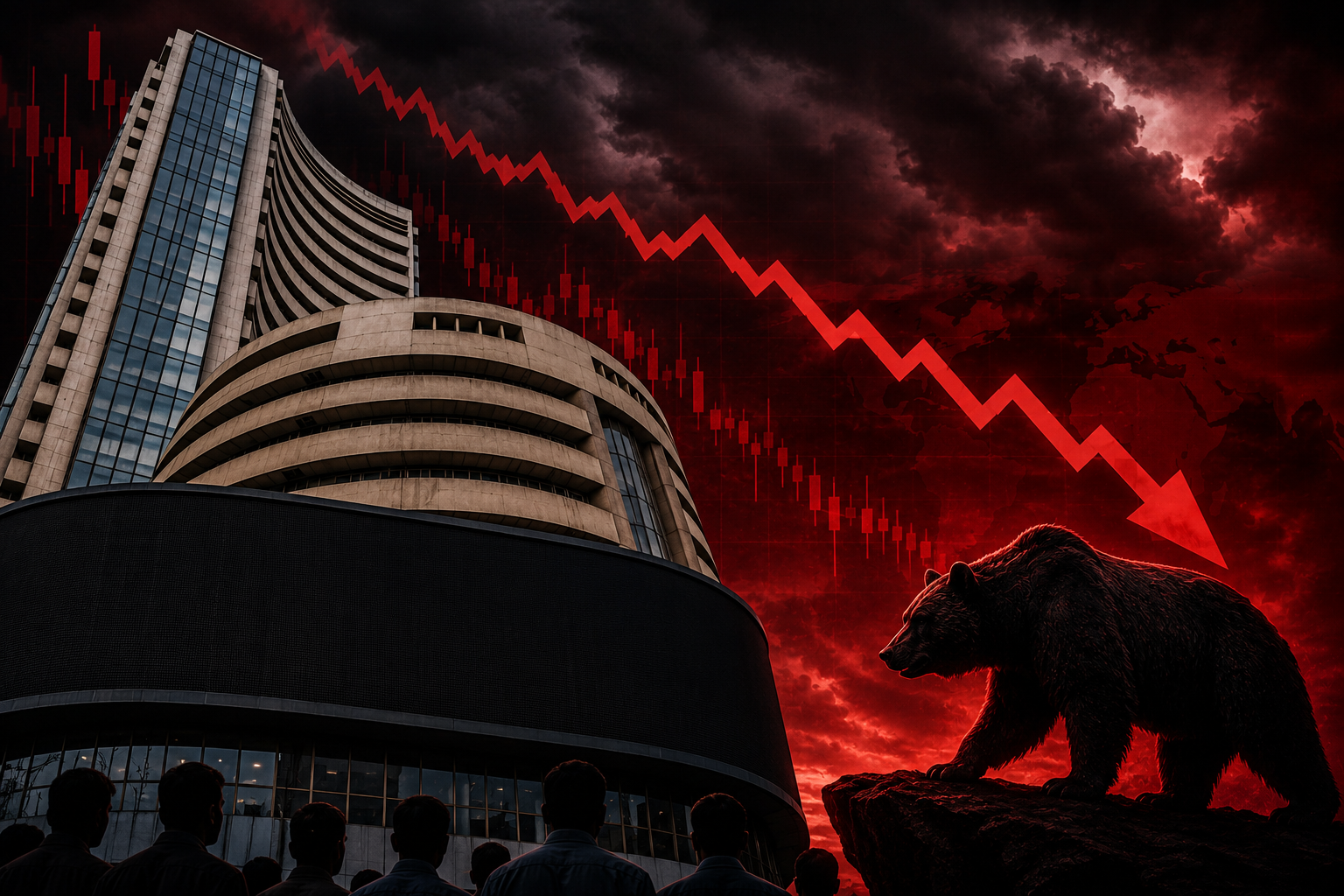
India’s stock market had a rough day on Wednesday, with the Sensex falling 715 points and the Nifty closing below the 24,000 mark. The decline wasn’t caused by a single event it was the result of growing worries in global markets.
The biggest trigger was the escalating conflict in the Middle East, which pushed crude oil prices above $95 a barrel. For a country like India, which imports most of its oil, higher crude prices can increase inflation, raise business costs, and put pressure on the economy.
Investors were also unsettled by fresh tariff threats from the United States, a weaker rupee, and continued selling by foreign investors. Together, these factors made traders move money out of equities and into safer assets. Banking, IT and pharmaceutical stocks led the decline, while only a few sectors, such as automobiles, managed to stay in positive territory.
For most people, a one-day market fall doesn’t mean a financial crisis. But it is a reminder that events happening thousands of kilometres away from wars to trade disputes can quickly affect Indian markets, investments, and even the prices consumers eventually pay.


Share





Related Articles
 theboduJuly 23, 2026
theboduJuly 23, 2026
theboduJuly 23, 2026
theboduJuly 23, 2026
theboduJuly 23, 2026
theboduJuly 23, 2026
theboduJuly 23, 2026

Congo’s Ebola Outbreak Crosses 1,000 Deaths. Why the World Is Concerned
The Democratic Republic of Congo is facing its fastest-growing Ebola outbreak on...
theboduJuly 23, 2026

US-Saudi Nuclear Deal Explained: Why the New Agreement Is Raising Global Questions
The United States and Saudi Arabia have signed a landmark civil nuclear...
theboduJuly 23, 2026

Why ASEAN Matters as Global Powers Meet in Manila
The annual ASEAN Foreign Ministers' Meeting in Manila has become one of...
theboduJuly 23, 2026

Can Police Hide Their Identity During Protests? What the Law Says
Videos from recent protests in Delhi have sparked a national debate after...
theboduJuly 23, 2026