

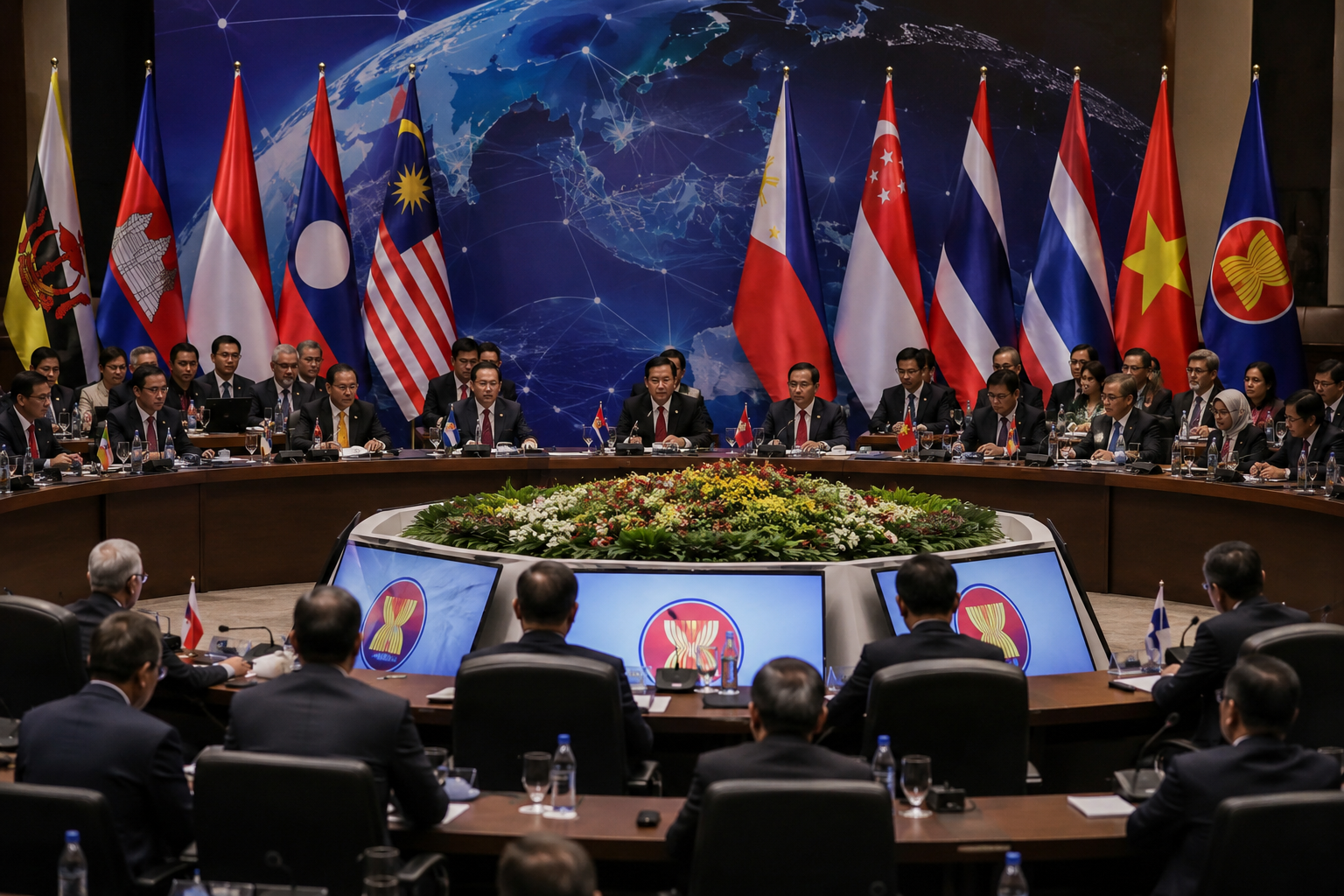
The annual ASEAN Foreign Ministers’ Meeting in Manila has become one of the world’s most closely watched diplomatic gatherings this week, bringing together leaders and top diplomats from across Asia, Europe and North America.
The spotlight fell on a meeting between US Secretary of State Marco Rubio and Russian Foreign Minister Sergey Lavrov, their latest high-level talks amid the ongoing war in Ukraine.
At the same summit, discussions also focused on rising tensions in the Middle East, disputes in the South China Sea and growing competition between the United States and China in the Indo-Pacific.
ASEAN the Association of Southeast Asian Nations—includes ten Southeast Asian countries and has evolved far beyond an economic grouping. It has become one of the few neutral platforms where rival powers continue to engage even when relations are strained.
While the summit does not produce binding global agreements, it provides an opportunity for informal diplomacy, helping countries keep communication channels open during international crises. This year’s agenda reflects the widening list of global concerns, from energy security and maritime disputes to the future of Ukraine and regional stability.
For India, ASEAN is central to its Act East Policy and Indo-Pacific strategy. Southeast Asia is one of India’s fastest-growing trade partners, and stability in the region directly affects shipping routes, investment and supply chains.
The discussions in Manila may not deliver immediate breakthroughs, but they influence how major powers manage conflict and cooperation in one of the world’s most strategically important regions.
As geopolitical tensions continue to rise, ASEAN‘s role as a bridge between competing nations is becoming more important than ever.