

Imagine looking so far into space that you’re actually looking back in time.
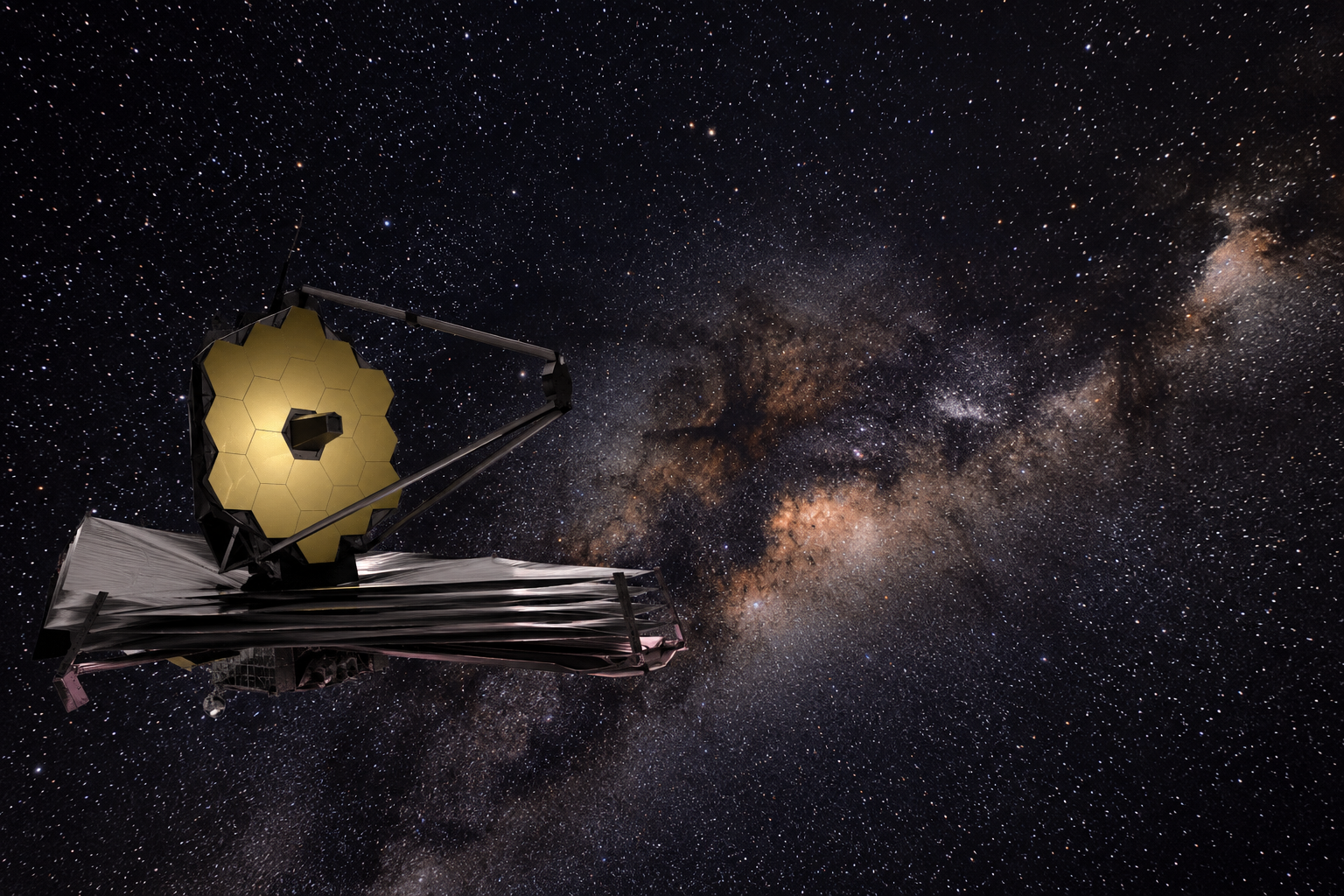
That’s exactly what NASA’s James Webb Space Telescope has done.
Astronomers have spotted one of the earliest galaxies ever seen one that already existed just 290 million years after the Big Bang.
Because its light took more than 13.5 billion years to reach Earth, scientists are seeing the galaxy today exactly as it looked when the universe was still in its infancy.
The discovery surprised researchers.
Until now, scientists believed the first galaxies would be small, dim and still slowly forming.
Instead, this newly observed galaxy is brighter, larger and appears far more developed than expected. That suggests the universe may have built its first galaxies much faster than scientists had imagined.
The galaxy, named JADES-GS-z14-0, was found by the James Webb Space Telescope during one of its deep-space surveys. Unlike the Hubble Space Telescope, Webb can detect infrared light, allowing it to peer farther into the universe and further back in time.
Every new discovery from Webb is helping scientists answer one of astronomy’s biggest questions: How did the universe grow from darkness after the Big Bang into the billions of galaxies we see today?
Researchers say this is only the beginning. As Webb continues exploring deeper into space, astronomers expect to uncover even older galaxies, bringing humanity closer to understanding the universe’s earliest days.